
At night the body slows down. The work does not.
Noxtura is a guide for people who work nights: what the hours from 21:00 to 07:00 do to a body built for days, what helps, and what the law owes you. Every line has a source. Not an app, not a network.
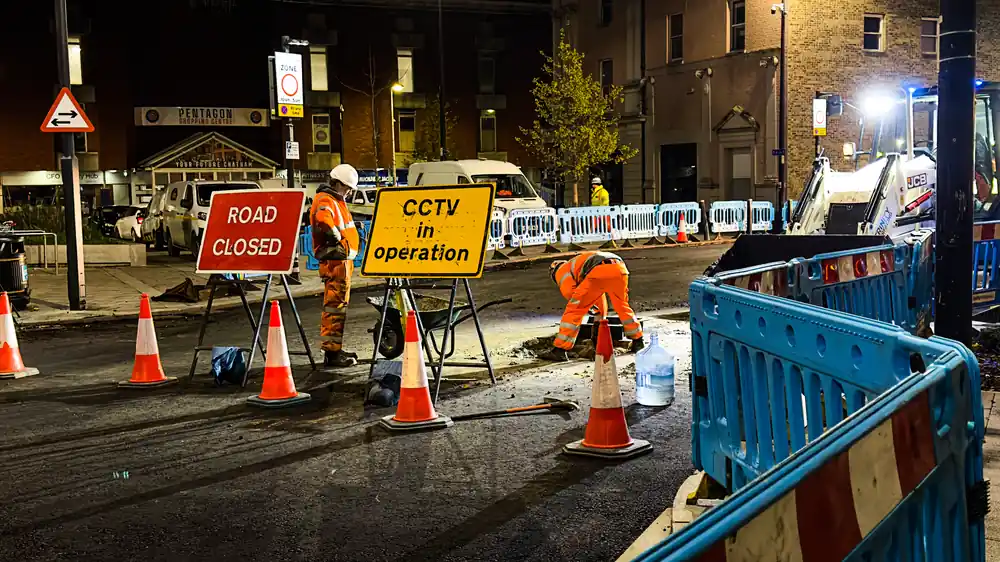
Road closure on Globe Lane, Chatham, Kent, 24 November 2025, 22:04. Photo: OathOn, CC BY-SA 4.0.

The body clock never fully adjusts to nights.
At night, heart rate, blood pressure and body temperature fall, and we slow down and feel sleepy. After a few nights the body clock starts to shift, but each function at its own pace, so sleep, digestion and alertness are thrown out. It never fully adjusts, even on permanent nights.
Health and Safety Executive, Managing shift work (HSG256), paragraphs 19 and 21 (2006)- Group 2ANight shift work is probably carcinogenic to humans.IARC Monographs, volume 124: Night shift work (2020)
- 2017A Nobel Prize for the molecular mechanisms of the body clock.NobelPrize.org, The Nobel Prize in Physiology or Medicine (2017)
- 7 to 8 hoursThe sleep most adults need a day, though the need falls with age.Health and Safety Executive, Managing shift work (HSG256), appendix 2 (2006)
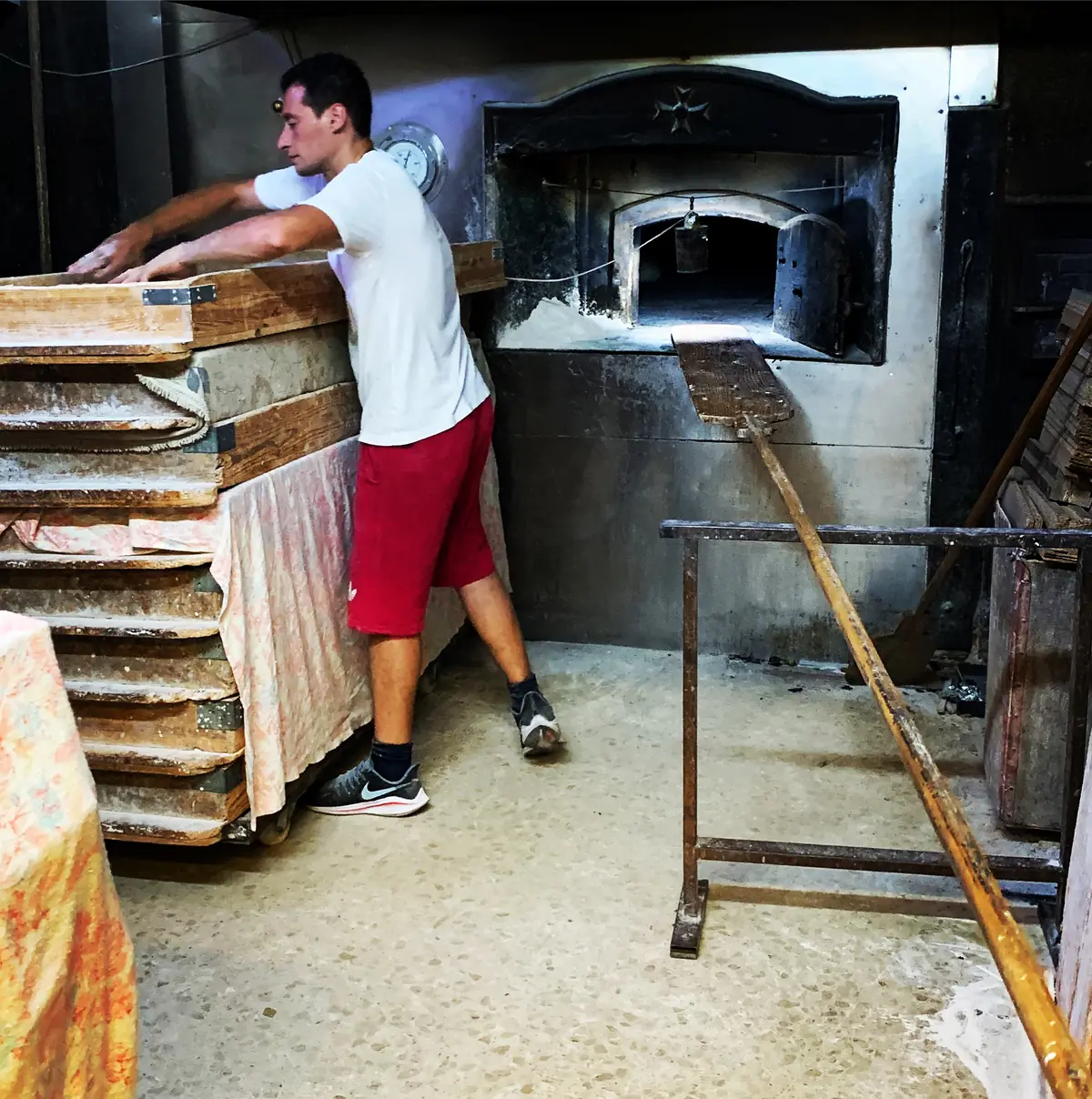

Eat light and often. One heavy meal can make you drowsy just when you need to be alert.
- Light meals
- Plenty to drink
- Fruit, not sweets
- Caffeine, occasionally
Eating and staying alert through the night
The window of circadian low: the hours of maximum sleepiness.
US aviation rules draw it from 02:00 to 05:59. The risk of errors, accidents and injuries is higher on night shifts, rises once a shift runs past eight hours, and grows with every night in a row.
Where possible, demanding, monotonous or safety-critical work should be kept out of the night and the early hours of the morning.
14 CFR 117.3, US flight crew duty rules (read 15 October 2026); Health and Safety Executive, Managing shift work (HSG256), paragraph 31 and table 4 (2006)The drive home
Night workers are more likely than day workers to have an accident driving home. Take public transport or a taxi if you can, share the driving, and if you feel sleepy, stop and take a short nap where it is safe.
Health and Safety Executive, Managing shift work (HSG256), paragraph 33 and appendix 2 (2006)Sleeping in daylight
Day sleep is usually lighter and shorter, and bright light at dawn can make it harder to fall asleep. Darken the room with heavy curtains or blackout blinds, keep it cool, and ask your household to keep the noise down.
Health and Safety Executive, Managing shift work (HSG256), paragraph 23 and appendix 2 (2006)Quick answers on your rights
Do I get paid more for working nights?
It depends where you work. The UK minimum wage has no higher night rate, and the US Fair Labor Standards Act does not require one. In Germany the employer owes paid days off or a supplement, unless a collective agreement settles it; in France, compensatory rest, and pay compensation where it applies.
GOV.UK, Night working hours (read 15 October 2026); U.S. Department of Labor, Night work and shift work (read 16 October 2026); Arbeitszeitgesetz §6, paragraph 5 (read 15 October 2026); Code du travail (France), article L3122-8 (as amended 10 August 2016)How long can a night shift legally be?
In the EU, 8 hours in any 24 on average. In the UK, 8 hours on average, usually over 17 weeks, with no opt-out. In Germany, 8 hours, up to 10 if it averages back to 8. In France, 8 hours a day.
Directive 2003/88/EC, article 8 (4 November 2003); GOV.UK, Night working hours (read 15 October 2026); Arbeitszeitgesetz §6, paragraph 2 (read 15 October 2026); Code du travail (France), article L3122-6 (as amended 1 January 2018)Am I entitled to a free health check?
Yes in the EU: before you start nights, then at regular intervals. In the UK the employer must offer one, and you do not have to accept. In Germany, every three years, and every year from age 50, paid by the employer.
Directive 2003/88/EC, article 9 (4 November 2003); GOV.UK, Night working hours: health assessments (read 15 October 2026); Arbeitszeitgesetz §6, paragraph 3 (read 15 October 2026)Is Noxtura an app or a network?
No. It started as an idea for a network of night workers. Nothing has been built: there is no app, no account and no members. This guide is what exists.